
- Internal Information
- Information for Theatre Students
- Simpson Productions Auditions
Simpson Productions Auditions
Participation with Simpson Productions is open to all Simpson College students.
article section.body-section:nth-child(2){padding-top:2rem;padding-bottom:2rem}
AUDITIONS—FALL 2026
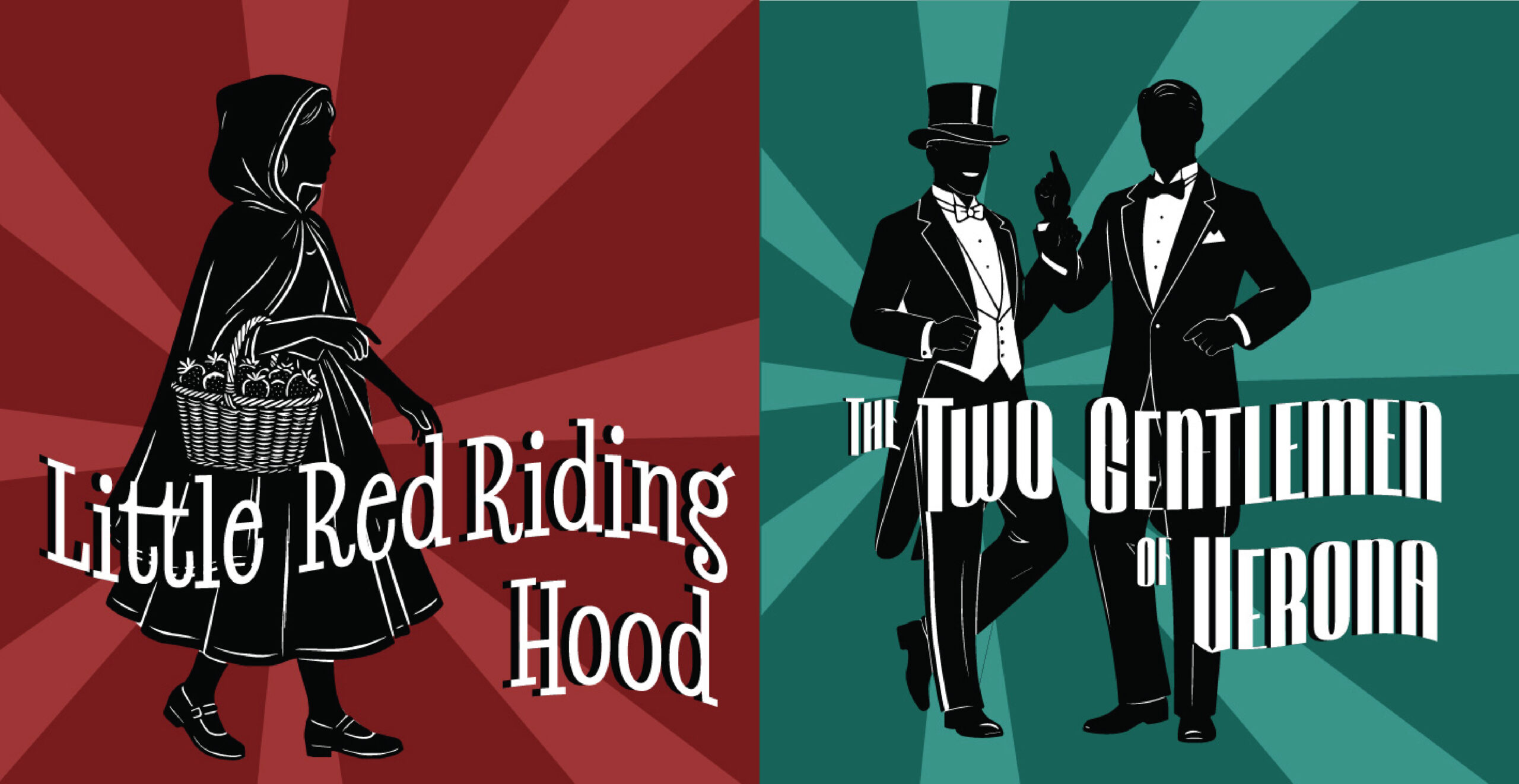
Little Red Riding Hood by Seymour Barab Performances October 5th-11. (road performances plus 2 in Barnum Theatre) Musical Director, Damon Stevens, Director, Ann Woldt
The Two Gentlemen of Verona by William Shakespeare Performances November 20-23 Director, Jennifer Nostrala
- Choral & Little Red Riding Hood Auditions, Duncan Hall, ARMC
Sat., 8/29, 4:00-8:00 pm
Sun., 8/30, 4:00-8:00 pm - The Two Gentlemen of Verona Auditions, Room 202, BPAC
Tues., 9/1, 6:00-8:00 pm - Little Red Riding Hood & The Two Gentlemen of Verona Callbacks
Wed. 9/2, Time TBA
For SIMPSON COLLEGE CHORAL PROGRAM & LITTLE RED RIDING HOOD
Prepare a one to two-minute excerpt of an aria, art song, or musical theatre song from the Golden Age that you feel best demonstrates your vocal quality, breath support, phrasing, range, and musicality. We prefer something in English, as long as it is not a pop song or a contemporary musical theatre piece.
An accompanist will be provided. Be sure to bring a copy of the music for the pianist in the correct key, with the cuts clearly marked. Make sure the entire piano part is visible and please have your music in a three-ring binder.
For THE TWO GENTLEMEN OF VERONA Memorize and stage a short comic Shakespearean monologue, no longer than 90-seconds. For those who are new to the process, we will have monologues available for cold readings.
For Little Red Riding Hood, auditions are in Duncan Hall in the Amy Robertson Music Building
For Two Gentlemen of Verona, auditions are in Blank Performing Arts Center, room 202
When should I arrive?
Please check in 15 minutes prior to your audition. Complete the online Simpson Productions/Choral Auditions form. Please follow this link to access that form. It is recommended that you warm up on your own prior to check-in. There are practice rooms on the main floor of the music building, which are available on a first-come, first-served basis.
What should I expect during the audition?
This is a chance for the voice area faculty and theatre directors to meet you and hear you sing. First, you will sing your prepared song excerpt, then you will be led through a series of vocal exercises demonstrating tonal memory, rhythmic and melodic sight-singing ability. While music reading is a strong asset, it is NOT a requirement to join the Simpson College Choir. The faculty will evaluate your range, tone quality, intonation, and musicality.
Audition Procedure
- Introduce yourself and your piece
2. Song/Aria
3. Vocalization (range and comfortable tessitura)
4. Tonal Memory
5. Sight-reading
THE TWO GENTLEMEN OF VERONA AUDITION INFORMATION
What should I prepare?
Memorize and stage a short comic Shakespearean monologue, no longer than 90-seconds. For those who are new to the process, we will have monologues available for cold readings.
What will happen at the audition?
Check in with the stage managers in the upper lobby outside of BPAC 202.
Arrive at least 10-minutes before your audition. The stage managers will take your photo.
Make sure you are warmed up prior to your audition.
When you come into 202, go to the center of the space and introduce yourself, the title of the play, and the character.
Dress as though you are going to an interview and wear something that makes you feel confident.
Everyone auditioning should prepare a monologue. (If you are new to auditioning you can use one of the cold read monologues available at the audition.)
Where can I find a monologue?
There are several online sources for Shakespeare monologues. Here are a few links:
https://www.stagemilk.com/shakespeare-comedy-monologues/
https://www.backstage.com/magazine/article/comedic-shakespeare-monologues-76995/
https://www.shakespeare-monologues.org/home
https://www.broadwayworld.com/article/Ten-Shakespeare-Monologues-For-Auditions-20191218
How do I prepare the monologue?
Read through the monologue several times to familiarize yourself with the text. Decide who your character is talking to and what they want from the other person.
Break your monologue down into smaller beats. Look for changes that happen in the monologue. Does the character try different tactics to get what they want? Does the subject change? Do they make a discovery. Breaking the monologue into smaller sections will help you find variety in your performance. It will also make memorization easier.
Memorize the monologue. The sooner you memorize the easier it is to work on the piece and the more confident you will be when performing.
Stage the monologue by imagining that you are talking to the other character past where the directors are sitting. You don’t want to speak directly to the people watching you. You do have the option of using a chair. Think about what your character needs and use that to help you discover what to do physically during the monologue.
A few other things:
- Time the monologue as you read it out loud. Remember, you want a 60-second monologue.
- Perform your monologue for other people. This is a great way to test out the audition and build your confidence with the piece.
- Have fun! Think of auditioning as just another opportunity to perform. 🙂 🎭
Finding a song
You can find most classical art songs and arias in the International Music Score Library Project (IMSLP: Free Sheet Music PDF Download) for free. The Simpson College Library also has an extensive collection of opera arias and classical art songs in multiple keys you can check out. Finally, feel free to check with your voice teachers and vocal coaches as additional potential sources of repertoire.
If you’re doing a song from a different genre (e.g., Golden Age musical theatre), you can find most songs on the online website Musicnotes.com. Try to select the original key in which your song was written. Again, if you live in the Indianola area, you can check out Dunn Library on the Simpson College campus.
How do I prepare the song?
Once you’ve chosen your song, narrow it down to a one to two-minute cut. Your cut should ideally show as much of your range as possible (especially the high notes you’re comfortable with) and have a character arc that allows you to tell a story. Once you have selected your cut, it’s important to practice singing it with the piano accompaniment by yourself so you know how it sounds.
There are numerous websites for accompaniment tracks for classical literature, especially on YouTube. Here’s an example of the popular English art song, “The Vagabond” by Ralph Vaughan Williams: The Vagabond Piano Accompaniment Low Key Songs of Travel Karaoke – YouTube. Be sure your accompaniment is in your preferred key and the same key as your score.
For musical theatre or other songs, consider purchasing the accompaniment through the website: https://www.pianotrax.com/ so you can practice independently of a recording. The Piano Trax website also allows you to purchase just the melody for practicing as well as the correct key for both the melody and accompaniment.
Memorize the song cut. The sooner you memorize the easier it is to work on the piece and the more confident you will be when performing.
Perform your song for other people. This is a great way to test out the audition and build your confidence with the piece.
For the audition:
- Have your music in a clean, black three-ring binder. (No loose pages.)
- Print your music front-back without staples or tape if possible. (Tape is okay if you must.)
- Have clean, legible copies of your music on white copy paper in the key you would like it to be performed.
- Have both the song and the composer clearly marked at the top of your cut.
- Have the last line of your monologue written before your entrance if appropriate.
- Indicate if you will need your pitch on the score by writing “(Pitch)” or “(Bell tone)”.
- Clearly mark where you want the piano to start and stop, not where you start and stop.
- Clearly indicate all cuts, even “whiting out” or crossing out the bars you would not like to have played if possible.
- Be sure the left hand on the bottom of the page and the vocal line at the top of the page have not been cut off your copy.
- Don’t use clear protector sleeves for your sheet music. If you’d like, using an iPad is okay, but make sure it’s charged!
- Don’t transpose your musical theatre songs using the previously mentioned online music services.
- Choose songs with material that matters to you, that speaks to your soul.
At the audition:
Bring your music to the pianist, give them your tempo by singing it softly to them and have fun!
For questions or to run through your musical audition material in advance, contact Dr. Damon Stevens at damon.stevens@simpson.edu.
- Questions about choral auditions? Contact Dr. Arnold, jon.arnold@simpson.edu.
- Questions about Little Red Riding Hood? Contact Dr. Stevens, damon.stevens@simpson.edu or Prof. Woldt, ann.woldt@simpson.edu
- Questions about The Two Gentlemen of Verona? Contact Prof. Nostrala, jennifer.nostrala@simpson.edu
Those interested in working backstage should also fill out the Simpson Productions Company Form.