
Graduate
Master of Arts in Criminal Justice
Take action. Make a difference.

Master of Arts in Criminal Justice
Interested in advancing your career in criminal justice, law enforcement, corrections, or public service? At Simpson, our Master’s in Criminal Justice program prepares you with advanced knowledge, practical skills, and personalized support to help you achieve your goals. Deepen your understanding of criminal justice systems, policy, leadership, and emerging issues while completing your degree in a flexible format.
Learning goes beyond the classroom. You’ll work closely with faculty who are invested in your success while applying advanced concepts to real-world criminal justice challenges through research, analysis, projects, and other experiential learning opportunities. Along the way, you’ll strengthen your leadership, critical thinking, communication, and ethical decision-making skills.
Whether you plan to advance in your current career, pursue leadership opportunities, or prepare for further graduate study, Simpson’s Master’s in Criminal Justice program provides the knowledge and experience to take the next step.
View Masters course requirements
Why Simpson College for Criminal Justice?

What Will I learn?
In Simpson’s Master’s in Criminal Justice program, you’ll develop an advanced understanding of the criminal justice system and the issues shaping the field today. Explore criminal justice policy, leadership, ethics, research methods, and strategies for addressing complex challenges. You’ll strengthen your ability to analyze data, evaluate policies, communicate effectively, and make informed decisions. Through applied projects and real-world perspectives, you’ll gain the knowledge and skills needed to advance your career and contribute meaningfully to criminal justice organizations and communities.

Career Ready
Our graduates are prepared to launch successful careers and make an immediate impact in the workforce. Here are a few examples of where Simpson alumni are building their careers:
- Ames Police Department
- American Federation for Children
- Children and Families of Iowa
- City of Atlantic Police Department
- Indianola Police Department
- Iowa Department of Corrections
- Iowa Department of Health and Human Services
- Story County Police Department

In pursuit of the mission of the program, the MACJ learning objectives are:
- To apply criminological and criminal justice theory to concrete situations. Rationale: effective policy development requires a theoretical application to deal with problematic situations constructively.
- Analyzing and interpreting criminological and criminal justice system data. Rationale: good policy decisions are dependent on critical thought and evidence-based evaluations.
- Formulate ethical responses to professional situations. Rationale: Ethical behavior in relationships with colleagues and the public, as well as ethical decision-making practices, are necessary to help ensure a just and fair criminal justice system.
Why Simpson College for Criminal Justice?
Median annual national pay
- U.S. Bureau of Labor and Statistics 2025
Anticipated job growth between 2025-2035
- Bureau of Labor and Statistics 2025
Master's Criminal Justice salary in Iowa
- Zip Recruiter 2026
Need Assistance? Contact us!
- denise.leifker@simpson.edu
- 515-961-1273
- Wallace Hall
- Monday - Friday, 8 a.m. - 4:30 p.m.
Meet Our Faculty

Denise Leifker
- Associate Professor
- Department Chair Sociology, Criminal Justice, Human Services, and Political Science
- Director Master's in Criminal Justice
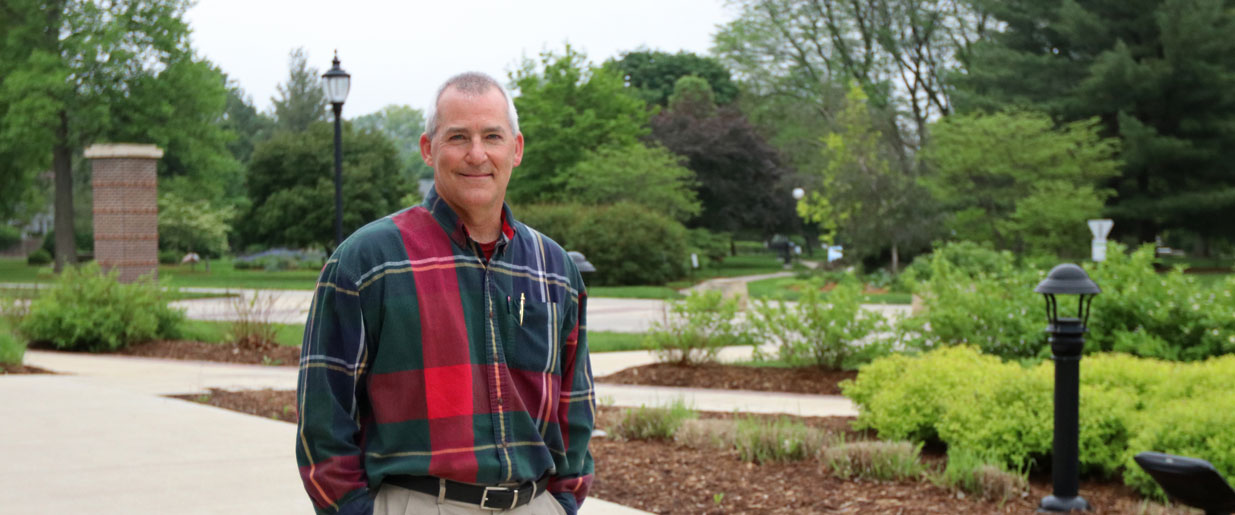
Craig Peck '89
- Instructor of Sociology and Criminal Justice
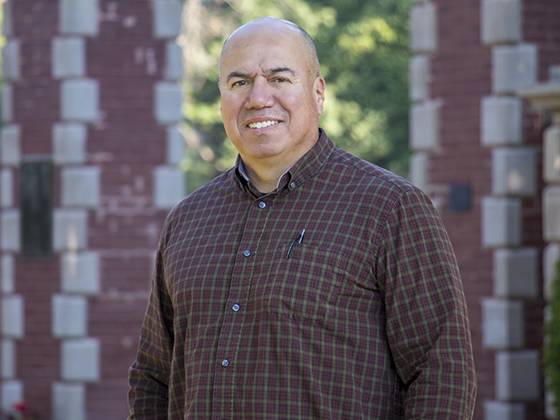
Mark Ruelas
- Instructor of Criminal Justice