Past Presidents
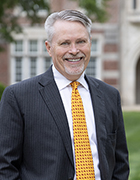 TERRY HANDLEY ’09 April – July 2025
Terry Handley ’09 became the acting president of Simpson College on April 21, 2025. At the time of his appointment, Handley was serving as the chair for Simpson’s Board of Trustees and had been a board member since 2015. The former president and CEO of Casey’s General Stores, Inc., in Ankeny, Iowa, holds a degree in Business Management from Simpson College.
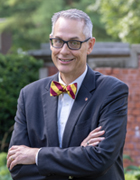
JAY BYERS, JD 2023 – 2025
Jay Byers ’93, JD, served as Simpson’s 25th president from July 2023 until his death on April 17, 2025. Highly regarded as a kind, positive and energetic visionary leader, President Byers established significant momentum during his service here. He oversaw completion of the $10 million Dunn Library renovation in May 2024, as well as many facility enhancements for athletics and the debut of the women’s varsity wrestling program in 2023-24. Also under Byers’ leadership, new student enrollment reached a decade high in Fall 2024, while first- to second-year retention increased five percent.
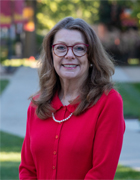
MARSHA KELLIHER, J.D. 2020 – 2023
Marsha Kelliher, J.D., began her tenure as Simpson’s 24th and first female president in 2020. A preeminent scholar, President Kelliher is a passionate leader with a proven track record of effective leadership at dynamic institutions. Under Kelliher’s leadership, Simpson has been named by Money.com as the No. 1 private college in Iowa for educational value and placed No. 7 overall in U.S. News and World Report’s 2022-23 Midwest Regional Rankings. In 2021, it was recognized by Washington Monthly as one of the top liberal arts colleges in the country, highlighted by a No. 9 earnings ranking for its large share of students who can support themselves financially after graduation.
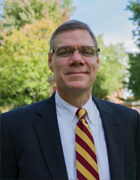
ROBERT J. LANE January – May 2020
Bob Lane, interim president, graduated from Simpson College in 1981. He worked as an admissions counselor at Simpson from 1982 to 1984, then after living outside Iowa for a few months, he returned to Simpson College to work in various roles in the office of advancement from 1985 to 1993. He has served as Simpson’s vice president for college advancement since 2007, where he led the “Imagine the Impact” campaign for the college that concluded in 2020 by surpassing its $25 million goal by raising $30.6 million. Mr. Lane served as the college’s president when the coronavirus pandemic struck in the spring of 2020, lending his strength, confidence, and encouragement to unite and support the campus community during a time of unprecedented uncertainty, anxiety, and stress.
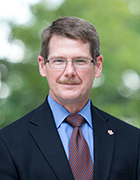
JAY SIMMONS 2013-19
Jay Simmons, Simpson’s 23rd president, began his tenure in 2013. Simmons was instrumental in launching the innovative Simpson Promise program, which covered the full cost of tuition for qualified students from Iowa. During his presidency, Simmons oversaw a $25 million comprehensive fundraising campaign, the crowning of a national championship speech and debate program and the construction of the Pedestrian Plaza. Simmons came to Simpson after serving as president at Iowa Wesleyan University. He stepped down as president following the fall 2019 semester.
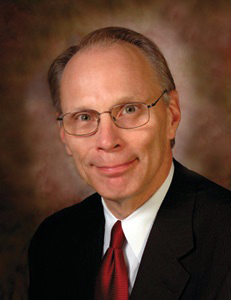 JOHN BYRD 2005-2013
John Byrd, Simpson’s 22nd president, began his presidency in 2005. Byrd had a legacy of success, bringing to Simpson the Kent Campus Center and expanding the Blank Performing Arts Center. Byrd was also instrumental in launching a new brand initiative, bringing Simpson’s story to places outside of Iowa. His years at Simpson also brought the John C. Culver Public Policy Center, the Iowa History Center and the Simpson Urban Studies Institute to campus. He also strengthened the academic curriculum, helping students adapt to the needs of employers and the global marketplace. Students can now obtain major in neuroscience. He also helped establish the Carver Medal in 2008. The past eight years during President Byrd’s time as president ultimately changed Simpson College’s story. He retired in 2013.
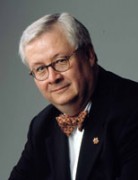 KEVIN LAGREE 1999-2005
R. Kevin LaGree, Simpson’s 21st president, was a Harvard-educated lawyer, United Methodist pastor and former dean of the Candler School of Theology at Emory University prior to his appointment at Simpson. During his presidency, he was instrumental in the successful funding of the Lilly Initiative for Vocational Development program, established with a $2 million grant from the Lilly Foundation. The faculty was strengthened during his years at Simpson, and he led the effort to establish a campus master plan for capital improvement. He appointed task forces to examine diversity, retention and marketing, and the resulting reports led to the appointment of a dean of multicultural affairs and the establishment of a marketing division. He was widely regarded as a public speaker and received numerous invitations to deliver sermons at area churches. LaGree resigned to become Senior Pastor of the First United Methodist Church in Des Moines IA.
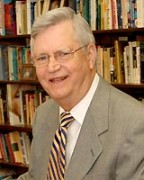 BRUCE HADDOX 1998-1999
Bruce Haddox, interim president, began his tenure at Simpson in 1969 as professor of philosophy and history. Haddox served as academic dean from 1994 until his retirement in 2006, continuing to teach each semester. His major goal as president was to build community. During this year the Simpson Fund total was the third highest in history, there was record enrollment and the college began implementing a new strategic plan to increase diversity and retention.
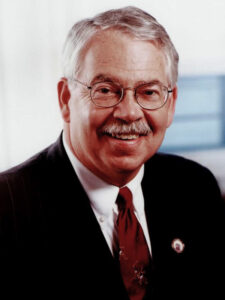 STEPHEN G. JENNINGS 1987-1998
Stephen G. Jennings, Simpson’s 20th president, came from the presidency of the School of the Ozarks. His background was in student development. During his tenure, the ‘Secure the Promise’ fund drive raised $37M for endowment and capital improvements. The athletic team name went from Redmen to Storm in 1992 with his leadership. Major capital projects, including the expansion of Carver Science Center, the construction of Picken Hall and the renovation of Wallace Hall, were completed during his tenure. Jennings resigned to become president of Oklahoma City University.
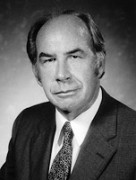 ROBERT E. MCBRIDE 1979-1987
Robert Edward McBride, vice-president and dean of academic affairs at Albright College, was nominated and elected 19th president of Simpson. After serving as a paratrooper in WWII, McBride had served as pastor and a college professor. During his administration, Simpson balanced its budget and added evening and Saturday classes and other short courses. The general studies program was again strengthened; January Term became May Term. The Fund for Excellence raised $20M. The Amy Robertson Music Center and McNeill Business and Computer Science Center were built; College Hall and Mary Berry Hall were restored. Simpson celebrated its 125th anniversary. When McBride retired, both he and Luella, his wife, were given honorary degrees. The new baseball diamond was named McBride Field.
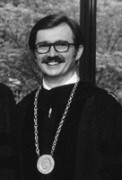 RICHARD B. LANCASTER 1972-1979
Richard Bailey Lancaster, formerly associate dean of academic affairs at Oberlin College, was elected the 18th president of Simpson in June 1972. Under Lancaster, there was a Goal Setting and Review Committee that resulted in a reduction of faculty, higher admissions standards, and the addition of general education requirements. Consensus building and collegiality eased student issues, doubled the endowment and encouraged the remodeling of food service and a new PE center. Lancaster resigned to be vice-president for college relations at Beloit College. Simpson granted him an honorary degree.
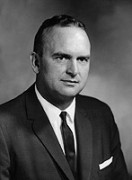 RALPH C. JOHN 1963-1972
Ralph Candler John, Army chaplain and dean at The American University, was recruited to be Simpson’s 17th president. During his tenure, there was increasing democratization of governance and liberalization of student life and the curriculum. His ten year plan succeeded: the faculty was increased by half; the academic calendar now included January Term; more land was purchased; and several buildings were added including a chapel, student center, performing arts center and coed dormitory. His time also included vast student unrest and revolt, antiwar rallies and an FBI probe. John resigned to accept the presidency of Western Maryland College.
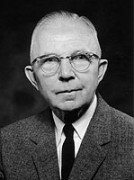 HURFORD E. STONE April-November, 1963
Hurford Stone, Simpson Class of 1916, was named acting president for seven months. He had just retired as dean of students at the University of California at Berkeley. This followed a distinguished career in education and the Navy, serving in both the First World War and WWII. Stone reenergized the campus and organized the Indianola Breakfast Club to foster relations between the college and the town.
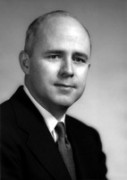 WILLIAM E. KERSTETTER 1953-1963
William Edward Kerstetter, an academician and ordained minister, was elected 16th president of Simpson College in December 1952. During his administration, enrollment increased, academic quality improved, faculty salaries doubled and the faculty grew. Kerstetter established the Vital Center program aimed to bring focus to students’ studies. He brought to the college renowned national and international speakers and initiated the Oxford Exchange Program. Through Kerstetter’s fundraising efforts, an endowed chair was named, professors received grants, a new library would be constructed and land was purchased, nearly doubling the size of campus. He resigned to become president of DePauw University in Indiana. The college granted Kerstetter an honorary degree.
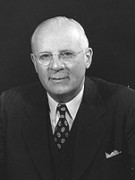 EDWIN E. VOIGT 1942-1952
Edwin Edgar Voigt was elected Simpson College’s 15th president and directed the college through two post wartimes. Declining enrollment plagued the college during both World War II and the Korean War. Voigt campaigned for better student housing as a means of recruitment. Funding for a women’s dormitory and a men’s dormitory was raised during Voigt’s administration. Voigt resigned to become a bishop in a new Methodist district that included North Dakota and South Dakota.
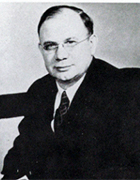 JOHN O. GROSS 1939-1941
John O. Gross was elected Simpson College’s 14th president and led the college through the second World War.
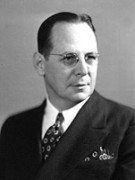 EARL E. HARPER 1936-1938
Earl Enyeart Harper was elected the 13th president of the college upon John Hillman’s retirement. He had previously served as president of Evansville College in Indiana. Harper restructured the curriculum into five divisions, eliminating the seventeen academic departments. A series of five committees comprised of three faculty members and three undergraduates called the Student-Faculty Federation was created during Harper’s reign. Harper resigned unexpectedly to accept the position of director of the School of Fine Arts and director of the Memorial Union at the State University of Iowa.
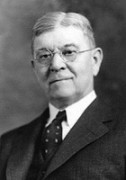 JOHN L. HILLMAN 1919-1936
John Linnaeus Hillman became Simpson’s 12th president after twenty years in the ministry. A former member of the Board of Trustees, Hillman’s tenure as president was the longest yet. His administration enjoyed much success in the 1920s with a growing faculty, expanding student body and a million dollar endowment. Hillman successfully guided the college through the depression amidst faculty cuts, low salaries and budget cuts. During his presidency, the college gained membership in to both the American Association of Universities and the American Association for University Women. Upon his retirement, he was elected president emeritus of the college. The administration building, built in 1920, was renamed for Hillman in 1961.
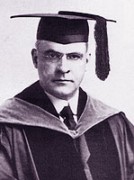 JAMES W. CAMPBELL 1916-1919
James Watson Campbell was elected the college’s 11th president. Members of the Board of Trustees traveled east to interview candidates and, by accident, met up with this Methodist minister. Campbell was an advocate of career-oriented education and helped establish a college-level Department of Economics and Business Administration.
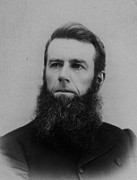 WILLIAM E. HAMILTON 1915-1916
Years later, in 1915, after the resignation of President Francis Strickland, Hamilton, now emeritus professor, was asked again to step into the presidency. This marked the fifth time Hamilton served as president or acting president. During this year, a fund drive was completed and $300,000 was added to the endowment. Hamilton House, a student apartment building, is named in his honor.
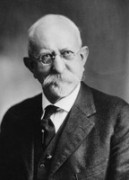 CHARLES E. SHELTON 1899-1910
Charles Eldred Shelton was the ninth president of Simpson. He was not a minister nor did he go to seminary. An Iowa Wesleyan University graduate, Shelton studied law, was admitted to the bar and served as Superintendent of Schools in Burlington. Through his leadership at Simpson, the total enrollment of the college grew along with the endowment; the Conservatory of Music, Administration Building, Carnegie Library and Central Heating Plant were built, a result of a successful Jubilee Campaign. Shelton resigned, citing his wife’s health and the need for new leadership.
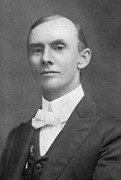 JOSEPH B. HARRIS 1898-1899
Joseph Benton Harris, the college’s eighth president, agreed to serve one year while the college searched for a new president. He was the pastor at the Methodist Church. Harris did not have an undergraduate degree or a seminary degree. He did attend Simpson as an undergraduate and was admitted to the Des Moines Methodist conference. During his administration, the concept of term hours was introduced and the college adopted the elective principle in its curriculum.
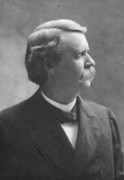 FLETCHER BROWN 1892-1898
Another Simpson alumnus, Fletcher Brown, served as vice-president of finance under Holmes. He took over as the seventh college president when Holmes resigned. Brown, a skilled fundraiser, successfully guided the college through times of national financial depression. While vice-president, he startedThe Educator, a publication which he continued to write, edit and publish during his presidency. The work discussed the virtues of the college and urged readers to support the college. Brown resigned to return to pastoral work.
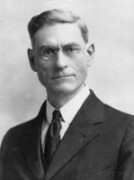 EDMUND M. HOLMES 1889-1892
Edmund Meek Holmes, a Simpson alumnus and chairman of the Department of Classical Languages, was elected the college’s sixth president. Prior to teaching, he had served a parish in Carroll, IA. During Holmes’ administration, the Simpson College Battalion was created, a fourth year was added to the academy program and a strong faculty emerged. Holmes left the presidency to return to the parish ministry.
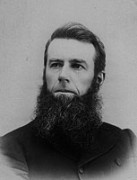 WILLIAM E. HAMILTON 1886-1889
William Ennis Hamilton, chair of Mathematics, accepted the acting presidency in the fall 1886. He was formally elected the fifth president in April 1887. Under his administration, the Science Hall and Ladies Hall were constructed and football was introduced. Hamilton resigned as president in June 1889, but remained on the faculty for twenty-five years.
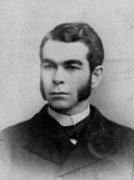 EDWARD L. PARKS 1880-1886
Edward Lamay Parks, the college’s fourth president, was recruited by members of the Board of Trustees. Parks had taught at Northwestern University for seven years prior to being a pastor in Chicago. During his administration at Simpson, the college’s debt was eliminated, faculty increased and the student enrollment more than doubled He resigned in May 1886 to take join the faculty in systematic theology at Gammon School of Theology in Atlanta, Georgia.
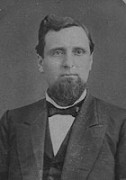 THOMAS S. BERRY 1878-1880
Thomas S. Berry, minister of the Indianola Methodist Church, became the college’s third president in July 1878. Berry had joined the Union Army during the Civil War, was wounded and taken as a prisoner for nearly a year. Berry died in office.
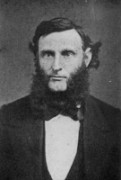 ALEXANDER BURNS 1868-1878
Alexander Burns, an ordained minister, was elected Simpson College’s second president, beginning his tenure at the fall term. Burns, the former vice president at Iowa Wesleyan University, led the college through rough financial times. He resigned to become president of Wesleyan Female College in Ontario, Canada.
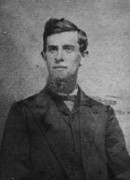 S.M. VERNON 1866-1868
Reverend Samuel Milton Vernon became Simpson College’s first president at the age of 25. He served as principal of the Des Moines Conference Seminary for one year prior to his election. In less than four months, Vernon submitted his resignation to enter the seminary to pursue theological studies.